Medicine
Medicine is one of the oldest and most demanding disciplines in the world. It trains you to understand the human body at its most fundamental level — and then puts that knowledge to work in the care of real patients. The path is long, the standards are high, and the commitment it demands is unlike most other fields. But for those drawn to it, it is also one of the most meaningful careers a person can build.
There are two broad directions within this field. The traditional medical degree — MBBS in the UK and much of Asia, MD in the US — trains you to become a practising physician.
One thing is true for this path: medicine rewards those who are genuinely driven by understanding and helping, not just those chasing a prestigious career.
Skills You Need

Exceptional memory and the ability to process large volumes of complex information

Clinical reasoning: connecting symptoms, data, and knowledge under pressure

Empathy and communication, patients are people, not cases

Resilience and emotional discipline; medicine exposes you to human suffering regularly

Attention to detail; small errors in medicine have serious consequences

Commitment to lifelong learning; the science never stops evolving

Career Pathway
- USA — Pre-med undergraduate (4 years) → MCAT → MD (4 years) → Residency (3–7 years)
- UK — Entry after Class 12 → UCAT/BMAT (depending on university) → MBBS (5–6 years) → Foundation Program (2 years) → Specialty Training (3–8 years)
- Germany — Entry after Class 12 → Abitur-equivalent + TestAS (in some cases) → Medical Degree (6 years) → State Exam → Residency (5–6 years)
- Singapore — Entry after Class 12 → Strong board results + UCAT (for some universities) → MBBS (5 years) → Housemanship (1 year) → Residency (3–6 years)
- India — Entry after Class 12 → NEET-UG → MBBS (5.5 years) → MD/MS (3 years) → Super-specialisation (3 years)
Career Paths

General Practitioner / Family Physician

Surgeon (Cardiothoracic, Neurosurgery, Orthopaedic, and more)

Physician / Medical Specialist (Cardiology, Oncology, Neurology, etc.)
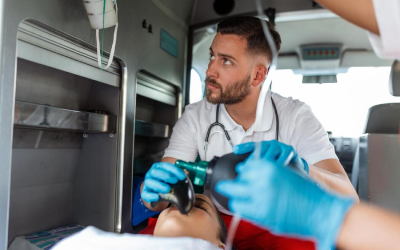
Emergency Medicine Doctor

General Practitioner / Family Physician

Surgeon (Cardiothoracic, Neurosurgery, Orthopaedic, and more)

Physician / Medical Specialist (Cardiology, Oncology, Neurology, etc.)

Emergency Medicine Doctor

Psychiatrist

Public Health Physician

Medical Researcher / Academic Clinician

Psychiatrist

Public Health Physician

Medical Researcher / Academic Clinician
Who Should Pursue This Field?
Medicine is best suited for students who are genuinely driven by both science and people. If you are fascinated by how the human body works, drawn to high-stakes problem-solving, and motivated by the idea of making a direct difference to someone’s life, medicine is likely the right direction.
It is not a field that rewards those who are drawn to the prestige alone. The training is long, the emotional demands are real, and the commitment required is unlike most other disciplines. The students who thrive are those who choose medicine because they cannot imagine doing anything else.
What Separates Strong Students from the Rest
At a certain level, most medical school applicants have strong grades. What differentiates top applicants is how they think and why they want to be there. Strong medical students demonstrate genuine intellectual curiosity about the science of medicine, not just the practice of it. They show emotional maturity and an ability to reflect on difficult situations. They have sought out real exposure to healthcare environments, not just read about them. And they can articulate a clear, honest reason for choosing medicine that goes beyond ambition.
Ideal Student Profile for Top Universities
- Clinical exposure: Time spent in real healthcare environments, shadowing doctors, volunteering at clinics or hospitals, or assisting in patient-facing settings. Not as a box to tick, but as genuine exposure to what the profession involves.
- Research or independent scientific inquiry: A project, paper, or investigation that shows how you think, not just what you know. Working alongside a faculty member, contributing to a lab, or publishing in a school or junior research journal all count.
- Science olympiads or academic competitions: Participation in Biology, Chemistry, or Medical olympiads signals academic depth and a willingness to be tested beyond the school curriculum.
- Health-focused community initiative: Running a health awareness campaign, organising blood drives, or leading a first aid program in school demonstrates both initiative and genuine alignment with the field.
- Medical writing or blogging: A sustained blog, newsletter, or column covering medical topics, healthcare policy, or scientific developments shows intellectual engagement beyond the classroom.
- Relevant online courses from top institutions: Completing courses in anatomy, neuroscience, or public health from Harvard, Johns Hopkins, or Duke signals self-directed learning and academic seriousness.
Top 10 Universities for Medicine

Harvard University, USA
The global benchmark for medical education. Faculty have shaped clinical practice worldwide, and its affiliated hospitals, Massachusetts General and Brigham and Women's, form one of the most extensive clinical training networks in the world.
University of Oxford, UK
Medicine at Oxford is as much about understanding science as practising it. The first three years focus on deep scientific foundations before clinical training begins, producing doctors who think rigorously about why, not just how.
Stanford University, USA
Strong across clinical medicine and biomedical research, with a culture that pushes students toward innovation. Stanford's proximity to Silicon Valley makes it the natural home for those interested in the intersection of medicine and technology.
Johns Hopkins University, USA
The institution that invented the modern research hospital. Consistently ranked among the best hospitals in the world, with particular strength in surgery, oncology, and neurology. Research is embedded into every level of training.
University of Cambridge, UK
One of the most scientifically rigorous medical programs in the world. Like Oxford, Cambridge builds deep theoretical foundations before clinical exposure, producing graduates exceptionally well-prepared for specialisation and research.

UC San Francisco, USA
One of the few top medical schools in the world focuses exclusively on health sciences. No undergraduate programs, everything points toward medicine, nursing, pharmacy, and biomedical research. Particularly strong in clinical research and patient care.
Imperial College London, UK
Where medicine meets engineering and technology. Imperial's unique position as a science and technology university makes it the strongest institution for biomedical engineering, digital health, and medical innovation in the UK.
UCL, UK
One of the largest and most research-active medical schools in the UK. Strong in neuroscience, cancer research, and global health, with access to some of London's leading teaching hospitals and a deeply international student community.
Karolinska Institutet, Sweden
Europe's most specialised medical university; focused exclusively on medicine and health sciences. The institution that selects the Nobel Prize in Physiology or Medicine each year. Particularly strong in cancer research, neuroscience, and epidemiology.
Yale University, USA
Yale's medical school is defined by its commitment to research and public health alongside clinical training. Strong in immunology, cancer biology, and global health, it produces a disproportionate share of future medical academics and researchers.
How Studea Can Help You
Medicine is one of the most competitive fields to gain admission to globally. Most students underestimate how early the preparation needs to start and how specific the profile requirements are. At Studea, we help you build a medical school application that is coherent, credible, and genuinely competitive — from identifying the right clinical exposure opportunities and research experiences to shaping your personal statement and preparing for interviews. The goal is not just to meet the requirements. It is to build a profile that reflects a student who is ready for the demands of medical training — and can demonstrate that clearly.