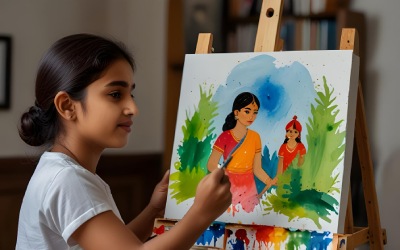
Arts Portfolio
Building an Arts Portfolio for University Applications
For students applying to fine arts, design, fashion, architecture, film, or related disciplines, the portfolio is not supplementary.
It is central.
Grades and test scores provide context. The portfolio provides evidence. It is where a university sees how you interpret space, form, texture, narrative, structure, material, and constraint.
It is not a gallery of favourite outcomes. It is a record of how you arrive at them.
What Admissions Committees Are Trying to Understand
When reviewing an arts portfolio, committees are not asking whether a piece is “beautiful.” They are trying to see how you approach an idea, and how that idea develops over time. They want to assess whether your work is conceptually grounded, whether you experiment with your ideas, and whether you refine your ideas over time.
Conceptual clarity matters. Originality matters. Technical skill matters. But none of these exist in isolation.
A technically impressive piece without intention feels hollow. An ambitious concept without execution feels unfinished.
The most compelling portfolios show both and show how one informs the other.
The Many Forms a Portfolio Can Take

Drawings, paintings, sculpture

Fashion collections and textile experimentation
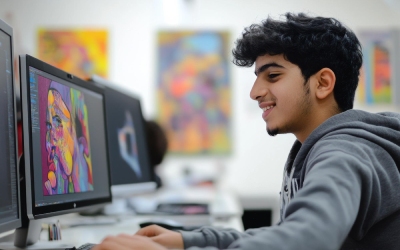
Graphic or communication design systems

Photography series with thematic coherence

Short films or moving-image projects
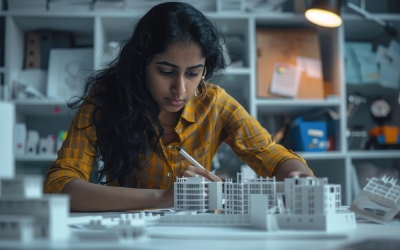
Architecture models, site studies, structural sketches
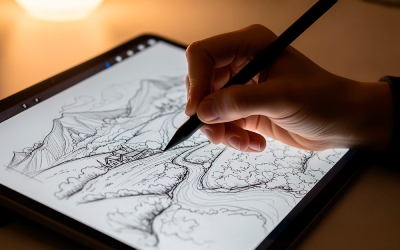
Digital illustration or interactive work
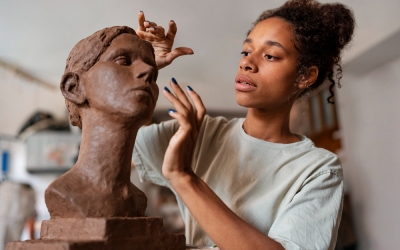
The medium shifts. The underlying logic should not.
Even across varied formats, there should be a thread — a set of recurring questions, concerns, or visual instincts that hold the work together.
Without that, the portfolio feels assembled. With it, it feels authored.
Process Is Not an Accessory
Finished work is only part of the story.
Admissions committees often look for the scaffolding beneath it. Process reveals seriousness. It shows that the work was built, not stumbled upon.
Without process, a portfolio can look decorative — visually appealing, but conceptually thin.
With process, even imperfect work carries weight because it shows thinking.
Alignment Matters More Than Variety
A portfolio does not need to demonstrate every possible skill. In fact, excessive variety can dilute impact.
An effective portfolio aligns with:

The discipline you intend to pursue

The themes you explore in your essays

The direction suggested by your academic preparation
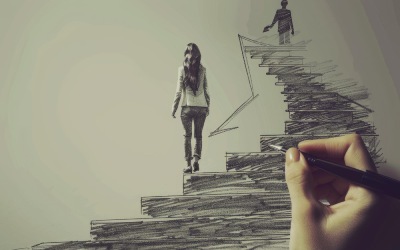
The trajectory you appear to be building
An applicant stating an interest in sustainable architecture should not submit a portfolio dominated by unrelated fashion sketches unless there is a clear conceptual link.
The work should feel intentional — not opportunistic.
Beginning Early
Portfolios cannot be assembled convincingly in a few weeks.
They require time for:
Experimentation without immediate pressure.
Feedback that reshapes early assumptions. Revision that improves clarity. Curation that removes weaker pieces.
The strongest portfolios often show progression — early work that is tentative, later work that is more confident and resolved.
That visible growth is part of what universities assess.
On Evolution
An arts portfolio is not a catalogue.
It is a record of evolution.
Universities are interested in trajectory — how your work develops, how your ideas mature, how your technique becomes more deliberate.
A portfolio that shows change suggests teachability. It suggests that you are not finished, but ready.
Creative talent may draw attention. Sustained discipline keeps it there.
How Studea Helps
Knowing what work to include is one thing. Building a portfolio that reads as coherent, intentional, and specific to your discipline is another.
At Studea, we work alongside students to develop and curate their portfolios with purpose. We help students identify the thread that connects their work, understand what admissions committees in their specific discipline are looking for, and make the editorial decisions that separate a strong portfolio from an unfocused one. We help students think through:
- Which pieces belong, and which should be left out
- How to present process work alongside finished outcomes
- How to align the portfolio with their essays and academic narrative
- How to develop new work that fills genuine gaps before the application deadline
The creative work is always the student’s own. Our role is to help them see it clearly — and present it with the intention and coherence that makes it compelling to the people evaluating it. Creative talent may draw attention. Sustained discipline keeps it there. A well-built portfolio is evidence of both.