Personal Branding
Personal Branding for Students (Grades 8–9)
Discover Identity. Shape Perception. Build Direction.
Strong university applications are not built in the final year of school.
They are built over time — through curiosity, exploration, and a clear sense of identity.
But identity alone is not enough.
Students must also learn how to communicate their interests, ideas, and strengths in ways that others can understand and value.
This is where personal branding becomes important.
Personal branding is the process through which students develop clarity about who they are and how they want their work, interests, and ideas to be perceived by others.
When students become conscious of their personal brand early, they begin making academic and extracurricular choices that reinforce a clear intellectual direction rather than building a scattered profile.
At Studea Advisory, Personal Branding is offered as a structured program designed specifically for students in Grades 8 and 9.
The program helps students explore their identity, discover emerging passions, and learn how to express their ideas and strengths with clarity and confidence.
This early foundation supports later stages of profile building, narrative development, and university applications.
What Personal Branding Means for Students
In the context of education and university preparation, personal branding is not about self-promotion. It is about intentional identity development and thoughtful projection. Students develop clarity on what genuinely interests them, what ideas and questions excite them, what values shape their perspective, and how they approach problems and opportunities.
At the same time, students begin learning how to communicate their ideas and work in ways that shape how others perceive them — influencing the projects they pursue, the platforms where they share ideas, and the communities they engage with. Over time, a student’s experiences begin to reflect a coherent narrative and intellectual direction rather than a random collection of activities.
The Studea Personal Branding Program
The Personal Branding program at Studea Advisory provides students with structured exposure and guided exploration during the early years of high school. Students participate in activities that encourage intellectual curiosity, reflection, and perspective-building — including curated reading and watching lists, writing and journaling exercises, and structured exposure to diverse academic disciplines.
Students also gain exposure to multiple environments: grassroots initiatives and community work, professional and industry settings, international perspectives, and academic and research ecosystems. Through these experiences, students gradually begin identifying the areas where their curiosity is strongest and how they would like to engage with the world around them.
1. Identity Discovery & Self-Understanding
2. Voice Development & Expression
3. Platform Identification & Presence Building
4. Skill Enhancement & Creative Development
5. Employability Exposure & Experiential Growth
6. Audience Building & Community Engagement
Our Personal Branding Framework
The program is structured around six key areas that support identity discovery, skill development, and thoughtful projection.

Identity Discovery & Self-Understanding
Students explore their roots, values, and formative influences through structured reflection — developing a clearer sense of who they are and what they are genuinely drawn to.
Voice Development & Expression
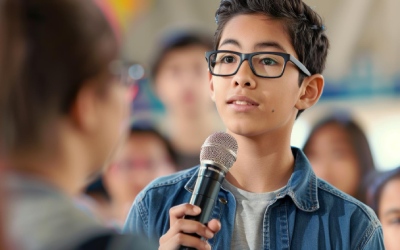
Through reflective writing, intellectual discussions, and public speaking, students build the clarity of thought and communicative confidence needed to articulate their ideas with purpose.

Platform Identification & Presence Building
Students identify the spaces — digital, academic, creative, or community-based — where their voice belongs and where their ideas can reach an audience that values them.
Skill Enhancement & Creative Development
Students are introduced to opportunities across writing, design, coding, research, and public speaking — experimenting across disciplines to discover the skills they most enjoy developing.

Employability Exposure & Experiential Growth
Through internships, volunteering, community engagement, and exchange programs, students observe real-world environments and develop a broader, more grounded worldview.

Audience Building & Community Engagement
Students build connections with peers, mentors, and networks — collaborating on shared interests, engaging with communities, and growing confidence in presenting their work to wider audiences.