
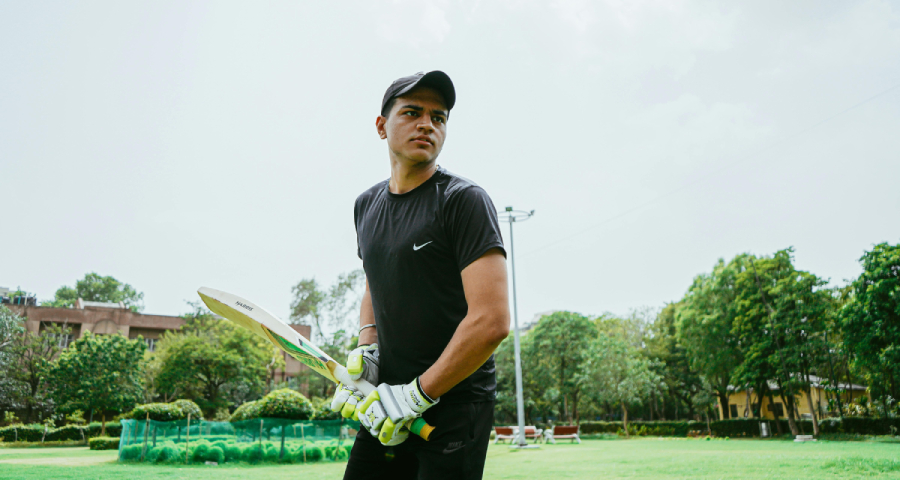
Introduction: The Question Every Sporting Family in Ahmedabad Asks
Every year, parents in Ahmedabad approach the Ivy League admissions process with a version of the same hope. Their child has represented Gujarat at state level in cricket, chess, swimming, athletics, or badminton. They have trained for years. They have the certificates, the medals, and the competitive record to prove it. And the question is always the same: does this help? Can being a serious athlete genuinely improve my child’s chances of getting into Harvard, Yale, or Princeton?
The honest answer is: it depends — and the nuance matters enormously. Sports and Ivy League admissions work differently from what most Indian families assume. Unlike American universities that offer full athletic scholarships and recruit athletes specifically to strengthen their varsity teams, the Ivy League has a unique and specific approach to student athletes that every family from Gujarat needs to understand before building their application strategy around it.
This blog explains exactly how sports factor into Ivy League admissions, what level of athletic achievement makes a genuine difference, which sports are and are not relevant, and how an Indian student from Gujarat can use their athletic profile most effectively in their college application.

How the Ivy League Approach to Athletics Is Completely Different From What You Expect
The first and most important thing to understand about sports and Ivy League admissions is this: the Ivy League does not offer athletic scholarships. This is not a small detail. It is a fundamental structural difference from almost every other Division I university programme in the United States.
According to the Ivy League’s official prospective athlete guidance, Ivy League schools provide financial aid to students, including athletes, only on the basis of demonstrated financial need — not athletic performance. No coach can offer a scholarship. No recruitment package comes with guaranteed funding. What Ivy League coaches can do is support a recruited athlete’s application by flagging them to the admissions office as a high-priority recruit — which meaningfully increases that student’s chances of admission. But it does not guarantee it, and it absolutely does not reduce the academic expectations.
This matters deeply for Indian students from Gujarat. In India, the assumption is often that exceptional athletic talent at the national level can open doors to universities that would otherwise be out of reach academically. In the American college system broadly, this is sometimes true — major state universities offer full athletic scholarships to talented athletes regardless of academic profile. At the Ivy League, it is not true in the same way. The Ivy League uses a metric called the Academic Index to evaluate recruited athletes. Every admitted athlete must meet a minimum Academic Index threshold — a composite score based on SAT or ACT scores and GPA — that keeps the academic profile of the student-athlete population close to the overall student body. A student with outstanding athletic achievements but test scores significantly below the competitive range for Harvard or Yale will not be admitted — regardless of how talented they are.
What Is the Academic Index and What Score Does an Indian Athlete Need?
The Academic Index is a number computed from a student’s standardised test scores and high school GPA that Ivy League schools use to ensure their recruited athletes are academically representative of the student body as a whole. It was introduced precisely to prevent the Ivy League from drifting toward the model of other Division I programmes where athletic ability can fully override academic credentials.
According to reporting and data compiled by admissions research platforms, the average Academic Index for recruited athletes at Harvard, Yale, and Princeton hovers around 220 — which corresponds to approximately an SAT score of 1480 or above and a strong GPA. At the lower Ivy schools — Penn, Columbia, Cornell — the typical minimum Academic Index corresponds to an SAT score of around 1380 to 1420.
For an Indian student from Gujarat aiming to use their athletic profile to strengthen an Ivy League application, the practical implication is direct: your academic credentials must be strong regardless of your sport. An SAT score of 1450 and a board exam percentage of 92 or above, combined with exceptional athletic achievement, gives you a legitimate pathway. An SAT score of 1300, regardless of how many state-level cricket titles you hold, does not.
According to Harvard’s admissions FAQ, the admissions committee considers personal qualities, leadership, and community involvement alongside academics. Athletic excellence is treated as one expression of these qualities — not a separate track that bypasses academic evaluation.

Which Sports Actually Help Indian Students From Gujarat in Ivy League Admissions?
This is the question that requires the most honesty — because not all sports are equal in the context of Ivy League athletic recruitment, and several sports that Indian students from Gujarat excel in are not part of the Ivy League varsity programme at all.
The Ivy League sponsors varsity teams across a specific set of sports — track and field, swimming, rowing, squash, tennis, fencing, wrestling, cross country, soccer, field hockey, volleyball, and others. For an Indian student to be recruited as a varsity athlete by an Ivy League coach, they need to excel in one of these sports at a level that is genuinely competitive by American collegiate standards — which typically means national level in India or significant international representation.
Cricket — the sport most Indian students from Gujarat know best and compete in most seriously — is not an Ivy League varsity sport. This does not mean cricket experience is irrelevant to an application. Cricket at a national or near-national level demonstrates exceptional commitment, teamwork, physical discipline, and competitive experience — all qualities that admissions officers value. But it will not trigger the recruited athlete pathway where a coach directly supports your application. It will be treated as a powerful extracurricular spike rather than an athletic recruitment credential.
The sports where Indian students from Gujarat most commonly achieve Ivy League-relevant competitive levels include chess — which several Ivy League schools support through club teams and competitions — squash, badminton, swimming, and track and field events. Chess deserves particular mention: Indian students have an exceptional global track record at the highest levels of competitive chess, and a student with a national or international chess rating that is genuinely competitive is someone that Yale or Princeton’s chess community will take seriously.
For an Indian student who competes seriously in a sport that is part of the Ivy League varsity programme, the path is to contact the relevant coach directly — ideally in Class 10 or early Class 11 — with a profile that includes competition results, video footage if appropriate, and academic credentials. Coaches who are interested will begin a dialogue and eventually provide the support letter that formally flags you as a priority recruit to the admissions office.
When Sports Is a Spike Rather Than a Recruitment Pathway
For the vast majority of Indian students from Gujarat — including those who have achieved real and impressive sporting success at state level — athletics will function in the application as an extracurricular spike rather than a formal athletic recruitment pathway.
This is not a lesser category. A student from Ahmedabad who has competed at the national level in any sport — who has demonstrated the sustained commitment, physical discipline, competitive resilience, and time management required to excel at that level while maintaining strong academics — has a profile element that very few applicants can match.
According to Yale’s official admissions guidance, Yale looks for students who have given every ounce to do something superbly — and elite athletic achievement is one of the clearest expressions of this quality in any application. An applicant who has trained six days a week for five years, who has represented their state or district in national competitions, who can articulate in their essay what the experience of competitive sport has taught them about failure, persistence, and community — that applicant is presenting a genuinely distinctive and compelling part of their story.
The key for Indian students from Gujarat is to present their athletic achievement with the same strategic clarity as any other spike. The application needs to show not just that you played a sport, but what level you reached, what recognition you received, what leadership roles you held within your team or club, and what your sporting journey reveals about your character. A student who captained their school cricket team and also led a cricket coaching initiative for younger players in their community has a far more compelling application than a student who simply lists state-level cricket participation without context.
For guidance on how to present your specific athletic achievements as part of a coherent, compelling application narrative, visit Studea’s Personal Branding page.

How to Build an Athletic Profile That Strengthens Your Ivy League Application
Whether you are pursuing the formal recruited athlete pathway or presenting sport as a spike, there are specific things you can do starting from Class 9 and 10 that will make your athletic profile significantly more compelling by the time you apply.
Compete at the highest level available to you and document every result. State championships, national qualifications, district competitions, inter-school tournaments — every result matters and should be recorded accurately. Admissions officers and coaches do not take claims at face value — they look for verifiable, specific competitive records.
Seek leadership roles within your sport. Captaining a team, organising a tournament, coaching younger athletes, founding a sports club at your school — these transform athletic participation into genuine leadership experience that has application value far beyond the sport itself. A student who is also a coach, an organiser, and a community builder within their sporting world has a far richer story than one who simply competes.
Connect your sport to your intellectual interests where genuine. A student from Ahmedabad who is passionate about sports science and has applied data analysis to their cricket training — tracking performance metrics, studying biomechanics, or researching injury prevention — has created a natural bridge between their athletic spike and their academic direction. This kind of genuine intersection is exactly what admissions officers find memorable.
Write about it honestly in your essays. The best athletic application essays are not about winning. They are about what losing, training, failing, and coming back taught you about yourself. According to Harvard’s application tips, the committee is looking for personal qualities and character — and sport, described honestly and specifically, is one of the richest sources of material for demonstrating exactly these qualities.
Conclusion: Sport Can Open Doors — But Only If the Academics Are There Too
The answer to whether being a state-level athlete can get an Indian student from Gujarat into Harvard or Yale is this: it can genuinely strengthen a strong application, and in some cases it can be the differentiating factor that tips a competitive application over the line. But it cannot replace academic credentials, and it cannot create a pathway that does not exist for sports outside the Ivy League varsity programme.
The Indian student from Ahmedabad who has reached state or national level in a relevant sport, who has maintained strong academic credentials alongside their training, who has demonstrated leadership and community impact through their sporting involvement, and who can articulate their athletic journey in a way that reveals genuine character — that student has a powerful and distinctive application. The sport is not the application. But it can be the part of the application that an admissions officer remembers.
At Studea Advisory, we help students from Gujarat and Ahmedabad identify how every part of their profile — including their athletic achievements — fits into a coherent, compelling application story. Book a free counselling session today.